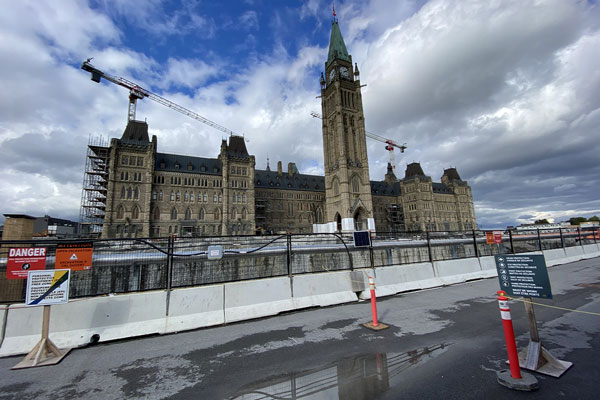
The largest, most complex heritage rehabilitation project ever undertaken in Canada is also the first major renovation to Canada’s main parliament building since 1916, after fire destroyed it. The original Centre Block building is being completely overhauled, with all heritage and art elements being carefully removed for restoration while the core of the building undergoes a thorough upgrade. Also on tap is the construction of the extensive underground Parliament Welcome Centre which will be located 20 metres below grade, tying Centre Block into the east and west blocks to improve circulation throughout the parliamentary complex.
Public Services and Procurement Canada (PSPC) is using innovative approaches and technologies to deliver the project. When the Centre Block reopens, it will be ready to meet the needs of a 21st-century Parliament for years to come. Centre Block had no means of protection against earthquakes but in the future, more than 500 seismic base isolators in the foundation will isolate the building from the earth to mitigate any future seismic events. The massive project is slated to run until 2031, cost between $4.5 and $5 billion, and is on track to be completed on time.
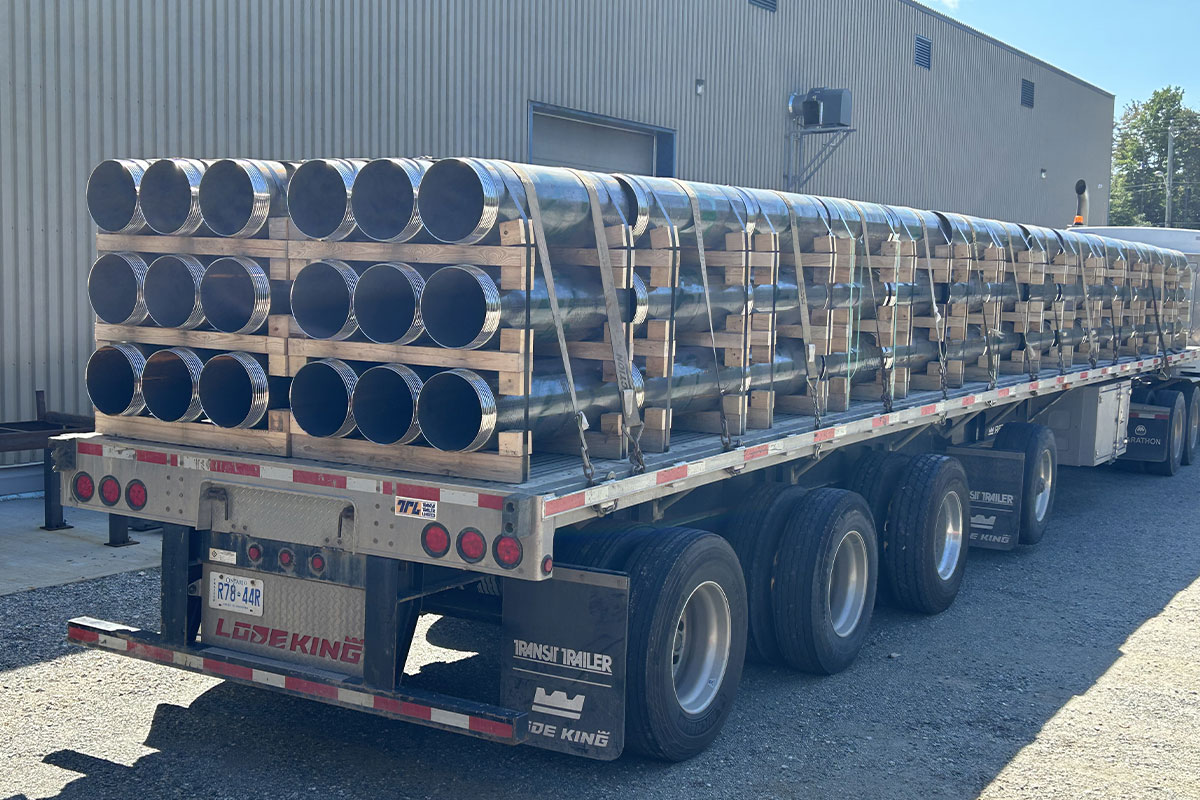
To form these 500 seismic base isolators, more than 1,200 piles of 324mm in diameter by 30m deep with rock sockets will have been drilled under the building in a ground composed mainly of solid rock. Each of the 30m piles are composed of 30 sections 1m long, threaded male x female. The 324mm x 12.7mm wall pipe being sufficiently thick, made it possible to machine the threads directly into the pipe. It is the thread proposed by our engineering department that was chosen for the entire project. This left hand thread has a round profile with 3 entries, which makes it quick and easy to thread, despite the possible dirty-difficult conditions on a construction site
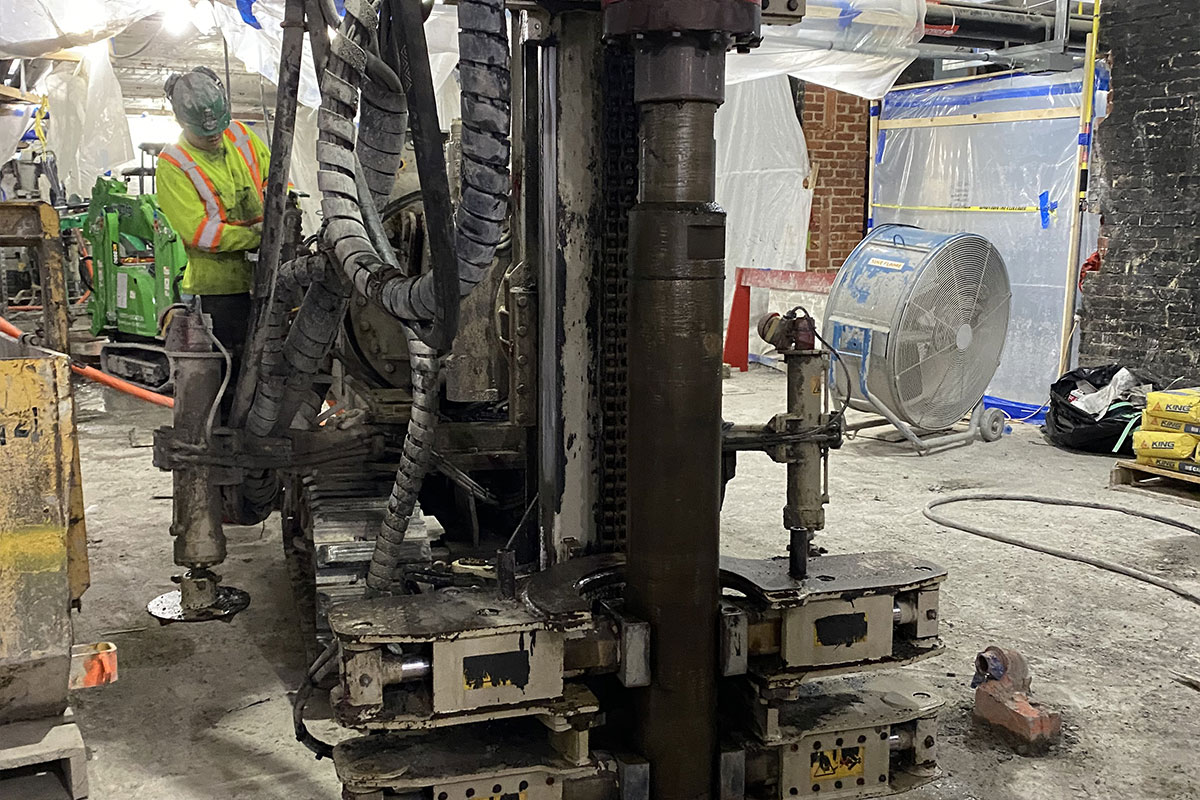
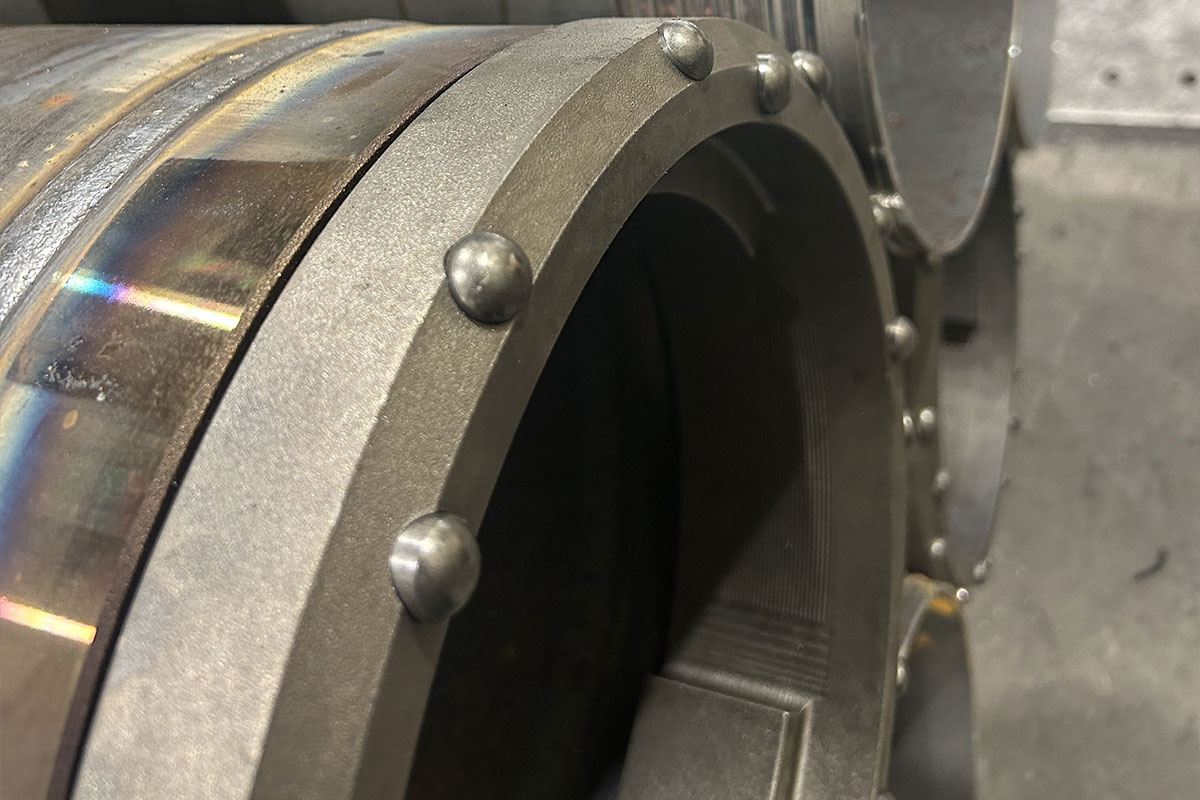
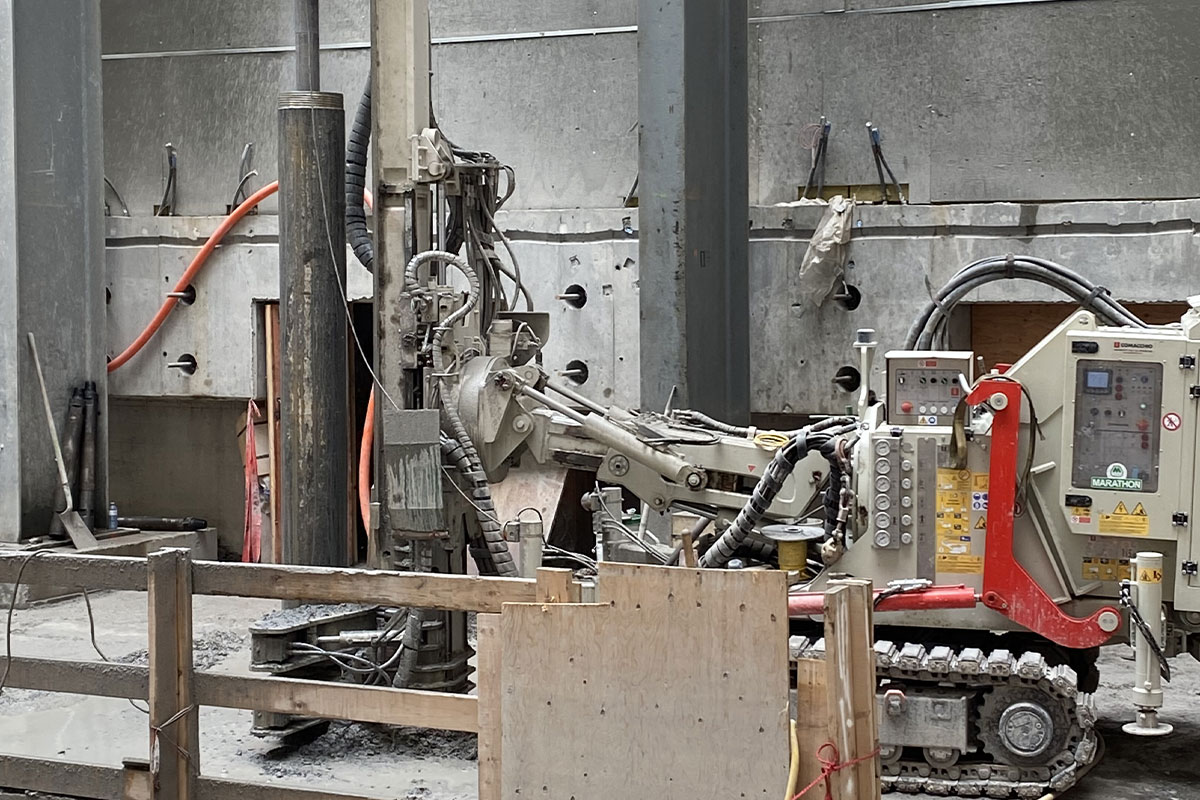
The contractor faced several major challenges. The first being that they would need to drill in the basement of the building, offering a clearance of only 3m. Not only did they have to find drill rigs small enough but also powerful enough to drill the 324mm pipe that could work in such an environment. They also had to find a casing advancement system that would allow to reduce the required rotation torque. The choice of our Xs GTE3 system was the perfect tool for this type of work as it allows for large diameters to be drilled, even with these small drill rigs thanks to its full-face drilling principle compared to a wing type system. In addition, the chosen system had to drill just slightly larger than the casing and all the while allow to drill a rock socket diameter beneath the tip of the pipe of 278mm (11'') in diameter.
GeoRocFor will have therefore provided for this project:
- More than 1200 crowns
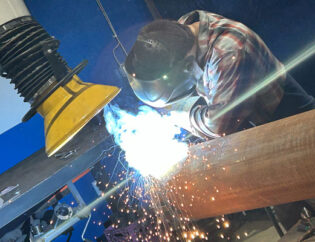
- More than 1200 quality welds to attach each crown to the starting length of casing
- More than 35,000 threads to connect each section together
- Receive, cut and package more than 8km of pipes in total
GeoRocFor is proud to have been able to participate in this most complex heritage rehabilitation project which, will remain marked in history.